Your dog “knows” what you’re asking. So why won’t they do it?

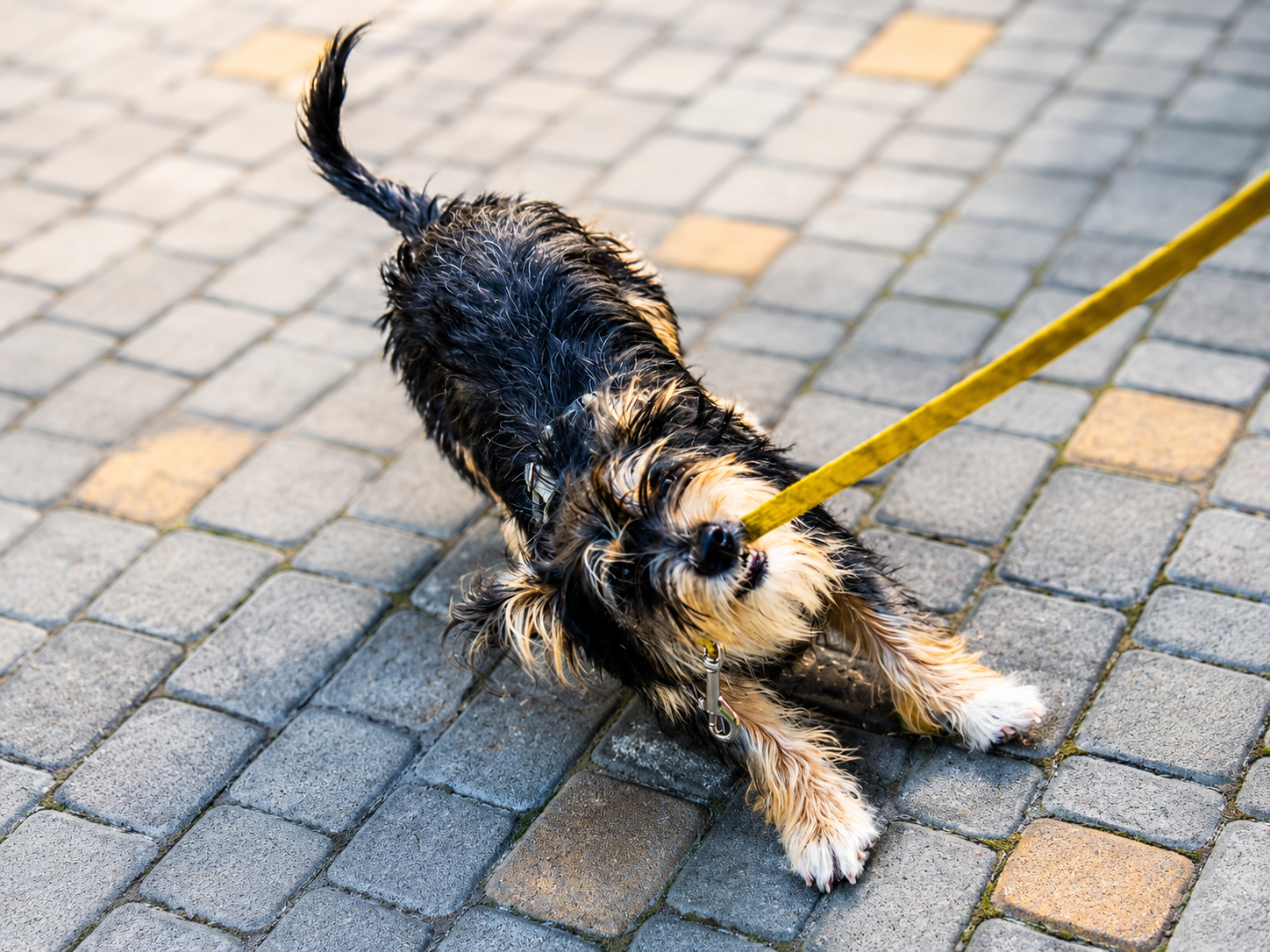
There is a certain kind of frustration that happens when your dog looks right at you, hears what you asked, and does something else.
And you know: they're not confused and they're not afraid. It just feels like they understand the request and have decided to do something else.
If you have an adolescent dog, you may know this feeling well. You say “sit,” and your dog just stands there, looking around. You call them, and they act like nothing happened and keep sniffing.
The thought that comes up is usually some version of this: “She knows this.”
I get why it feels that way. When a dog has done something before, especially many times, it seems fair to expect them to do it again. But this is where adolescent dog training gets tricky.
Your dog may understand what you are asking. That does not mean the behavior is reliable yet.
The short answer: Your adolescent dog may understand what you are asking in easy situations, but that does not mean they can do it around distractions, excitement, or stronger rewards. Most “not listening” is a sign that the skill needs more practice in that setting, not that your dog is being difficult on purpose.
Ideas to remember
- Your dog can understand a cue in one setting and still struggle with it somewhere harder.
- Adolescent dogs often need more practice around distractions, excitement, and real-life rewards.
- Repeating a cue usually does not make it stronger.
- Make the situation easier, reward the first correct response, and build back up slowly.
- Going back to basics is my go-to move every time. It may feel boring or backwards, but it is how reliable behavior gets built.
Why it feels like your dog is ignoring you
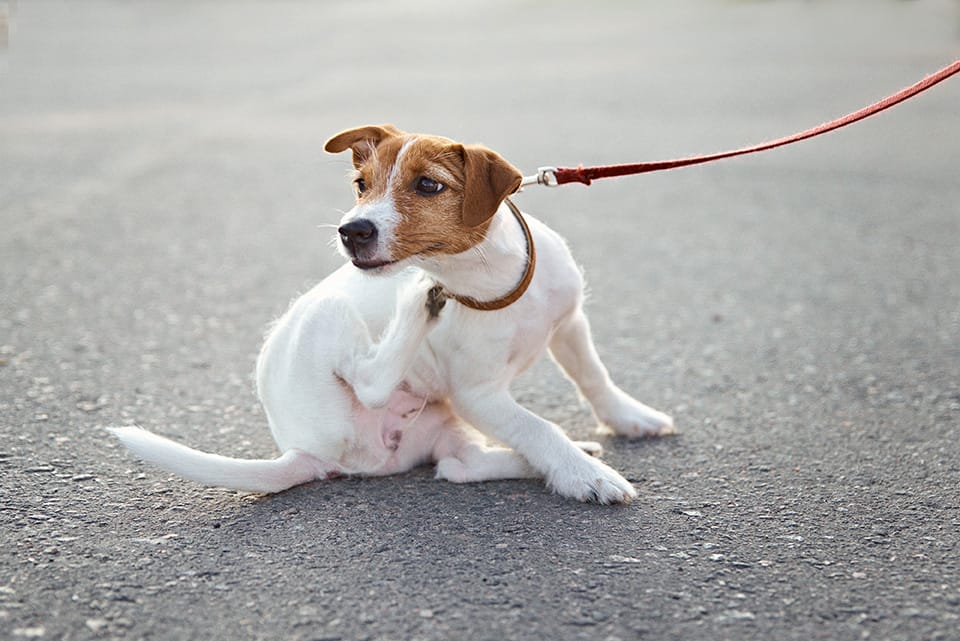
Dogs can be good at making us feel ignored. You ask for something. Your dog hears you. They might even glance at you. Then they go right back to what they were doing.
Of course that feels rude from a human perspective!
The thing is, behavior is not just about whether your dog heard the word. It is also about what is happening around them, what they want in that moment, how excited they are, how much practice they have had in that situation, and what usually happens after they respond.
That is a lot more useful than “knows it” or “doesn’t know it.”
If your dog sits every time you hold a treat in the kitchen, your dog has learned that sitting in that setup works. The room is familiar. You are close. The reward is clear. There is not much else going on.
Now change the picture. You are outside. The grass smells interesting. A neighbor is unloading groceries. A dog is barking behind a fence. Your leash is twisted around your wrist. Your dog has been inside for five hours and is full of energy.
You say “sit.” It is the same word, but it is not the same job.
This is the part many people miss. Dogs do not automatically use a skill in every place just because they learned it in one place. They need practice learning that “sit” means sit in the kitchen, in the yard, near the sidewalk, when a person walks by, and when another dog is nearby.
Until that happens, “my dog knows this” usually means: my dog knows this under certain conditions.
I love this for us! It gives us a training plan.
Why your dog seems to know something at home, but not elsewhere
A lot of dog handlers think training has two categories: either the dog knows it, or the dog does not.
Most adolescent dog behavior lives in the middle.
Your dog might know how to sit when calm, but not when excited. They might come when there is nothing better to do, but not when they are sniffing something fascinating. They might keep four paws on the floor with you, but not when your friend comes over and uses the high-pitched dog voice.
That does not mean the earlier training was fake. It means the behavior needs more layers.
A reliable behavior is not just a dog understanding a word. It is a dog being able to respond to that word in different places, around different distractions, and in different emotional states.
A seasoned trainer will usually look at three things before blaming the dog:
- What happened right before the behavior?
Where was the dog? What was nearby? How close was the distraction? Was the dog already excited? - What did the dog do?
Did they ignore the word, move away, pull, bark, jump, sniff, freeze, or offer a different behavior? - What happened right after?
Did the dog get closer to something they wanted? Did they get to keep sniffing? Did a person give them attention? Did the exciting thing go away?
That pattern—memorize it. Dogs repeat behavior that works for them. If you can see what is setting the behavior up and what is keeping it going, you can change the plan.
Why your dog ignores you around distractions
Dogs do what works.
If pulling toward a smell gets your dog closer to the smell, pulling has been paid. If jumping gets attention, even messy attention, jumping can work. If ignoring “come” means your dog gets ten more seconds of sniffing, that choice has a payoff too.
This is not your dog being sneaky. It is behavior doing what behavior does.
Your dog is always learning from what happens next.
That is why adolescent dogs can seem so inconsistent. The world starts offering bigger rewards. Sniffing, greeting, chasing, watching, moving, and exploring can all become more valuable than responding to you.
This is especially true outside. Outside is not just “not the house.” Outside is full of information. Every smell matters. Every movement might be worth watching. Every person, dog, leaf, wrapper, and weird shadow has potential.
So when you ask your dog to do something, your request is competing with all of that.
This is where many people accidentally underpay hard behavior. A dog who sits in the kitchen might be happy with a small treat or a quick “good.” A dog who turns away from another dog, comes off a smell, or checks in with you near a distraction has done something harder.
Hard work should pay off!
What does that mean? This depends on your dog. It could mean food, play, permission to go sniff, moving forward or greeting someone, when appropriate. It can even mean getting more distance from something that feels too intense.
Whatever you are offering as a reward has to matter to your dog in that moment. What works in your kitchen may not matter on a walk. What works when your dog is calm may not work when they are excited. Your dog’s behavior will tell you if the reward is doing its job.
Why teenage dogs seem to stop listening
Adolescence is not an excuse for every annoying thing your dog does, but it is a real factor.
During this stage, many dogs become more interested in the world. Their energy shifts. Their social interest may increase. Their reactions may get bigger. Their ability to think clearly around exciting things may be less polished than their size suggests.
That gap creates a lot of frustration. Your dog may look grown, but that does not mean they have adult-level skills. A teenage dog can have a big body and a still-developing skill set.
We often expect the dog to “know better” because the dog looks older. After all, she's not a puppy anymore! The dog, meanwhile, is still learning how to respond when excited, curious, worried, tired, or distracted.
So no, your adolescent dog does not want you to act like they are helpless. But they also do not need you to assume the finished behavior should already be there. They need training that matches the real difficulty of the moment.
The mistake we all make: Testing instead of training
This is one of the biggest traps with adolescent dogs.
People often want to test their dog's finished behavior in the hardest situation, then feel frustrated when the dog cannot do it.
Calling your dog away from play is not the place to find out whether their recall is strong. Asking for perfect leash walking right beside another dog is not the place to begin teaching focus. Expecting calm greetings when guests are already inside, excited, and talking to your dog is asking for the final version of the skill.
That is testing, not training.
Testing asks, “Can you do this right now?”
Training asks, “How can I help you get this right?”
If your dog fails a test, you do not need to panic. You need to lower the difficulty and train the missing step.
If your dog cannot come away from another dog, start by practicing recalls away from boring things. Then practice away from mildly interesting things. Then practice with more distance from another dog. Use a long line where needed. Reward well. Build gradually.
If your dog cannot sit when visitors arrive, do not begin with three excited friends at the front door. Practice with one calm person. Practice before the person comes all the way in. Practice farther from the door. Reward small wins.
If leash walking falls apart near other dogs, stop trying to march past dogs at close range and hoping this time will be different. For most behaviors where the dog is dealing with distractions and you're about to lose your mind, you can implement three steps:
- Create distance.
- Reward your dog for noticing you.
- Move up gradually. Practice only when and where they can still pay attention.
What to do when your dog ignores you
When your dog does not respond, the most natural thing in the world is to repeat yourself.
“Sit. Sit. Sit.”
The trouble is that repeating the word over and over usually does not make the behavior stronger. In many cases, it teaches your dog that the first word was not very important.
Instead, pause and look at the setup.
Ask: is this too hard for my dog, right now?
Then make something easier. Move farther from the distraction. Ask for a smaller behavior. Reward quickly when your dog succeeds. Then practice again at that easier level.
Let’s say you ask your dog to sit near another dog, and they cannot do it. Pause. Move farther away. Ask for something easier, like their name or a hand target. When they respond, reward them. If they are calmer, try the sit again from that easier distance.
Or say you call your dog in the yard, and they keep sniffing. Instead of calling five more times, move closer. Use a cheerful tone. Make the choice easier. When they turn toward you, reward that. Next time, practice before they are deep in the most interesting smell of the day.
Or your dog jumps when someone enters. Instead of repeating yourself from across the room, change the greeting setup: Create space. Use a leash if needed. Find a moment to toss treats to your dog before they launch at the visitor. Ask for a behavior they can actually do in that moment. You're aiming to reinforce even the smallest bit of the behavior you can get in that moment.
Why going back to basics helps teenage dogs listen
This is where a lot of people get stuck.
They feel silly rewarding a dog for something the dog “already knows.” They worry that going back to easier practice means the dog is getting away with something. But easier practice is not the same as giving up. It is how you build the missing part of the skill.
Dogs need successful practice in the situations where we want the behavior to work. We need to do this more than once, and not just when nothing else is happening. Many times, in many places, with the difficulty raised slowly enough that the dog can keep winning.
A behavior that has only been practiced in easy conditions will often fall apart in hard conditions. That does not mean the dog is bad. It means the behavior needs more support.
Pay for the version of the behavior you actually want
Not all sits are equal. A sit in the kitchen before dinner is one thing. A sit while a delivery person is at the door is another. A sit while another dog walks past is harder still.
If you want your adolescent dog to respond in harder moments, those harder moments need to be worth it.
Some people worry this is bribery. It is not. Bribery usually happens before the behavior, often as a plea. Reinforcement happens after the behavior and makes that behavior more likely next time.
You are not saying, “Please do this and I’ll make it worth your while.” You are saying, “That choice worked. Try it again.”
The reward does not always have to be food, though food is useful because it is clear, fast, and easy to repeat.
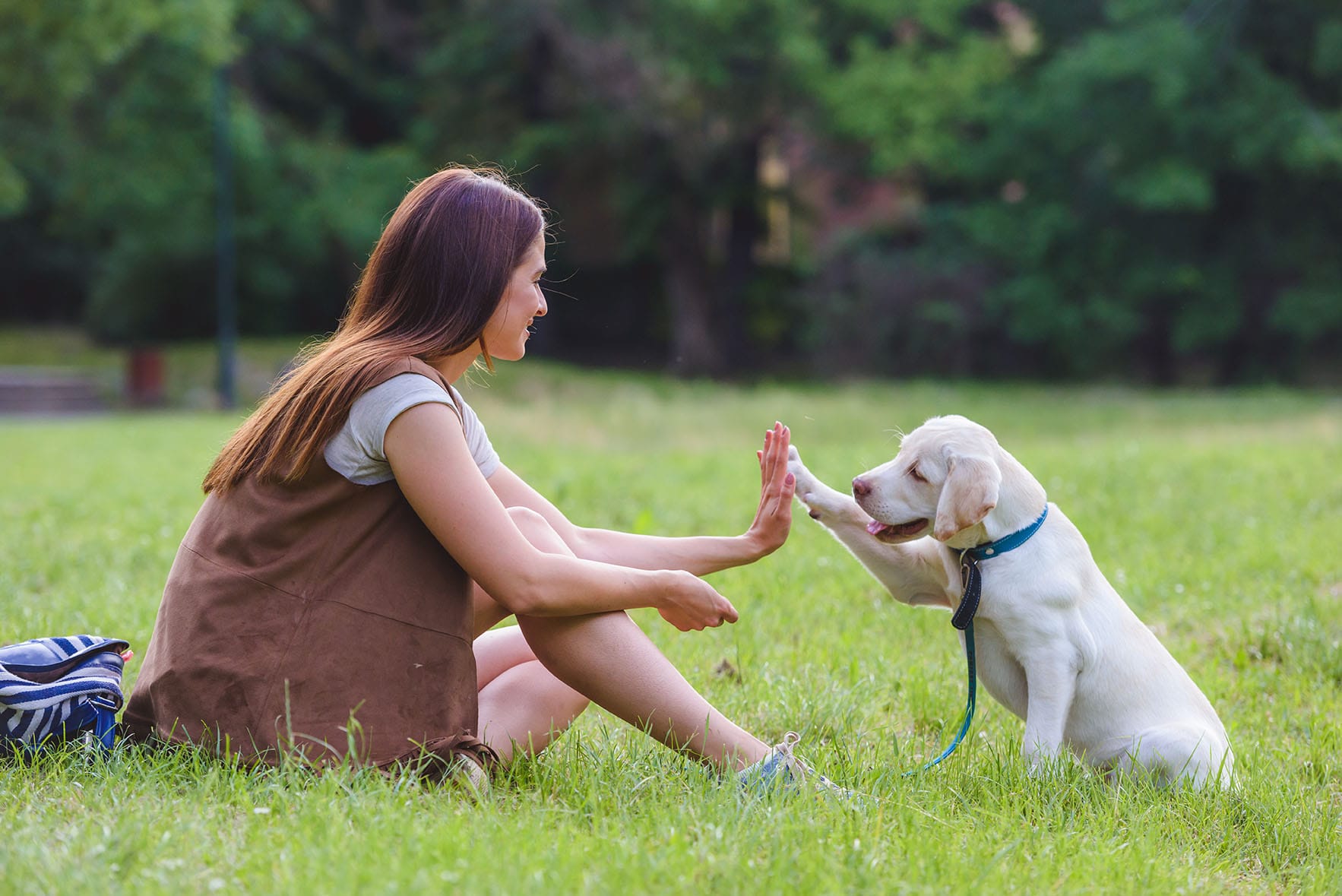
For some dogs, the best reward on a walk is permission to sniff. If your dog looks back at you instead of dragging you to a tree, you can reward by letting them go sniff that tree.
For some dogs (I'm looking at you, herding breeds), movement is rewarding. A few steps forward after loose leash walking can be a reward. For some dogs, distance is the reward. If your dog is worried about another dog, moving away can be deeply helpful. For some dogs, greeting is valuable. When it is safe and appropriate, calm behavior can lead to access to the person they want to greet.
Use what your dog wants to strengthen the behavior you want. That is not spoiling your dog. That is using the natural outcome to your advantage.
Use setbacks to your advantage—as information
When your dog's behavior doesn't go the way you want, it can feel like failure. Your dog lunges toward another dog, ignores you in the yard, jumps on a guest, cannot focus in class, or barks at something they ignored last week. Ugh!
It is easy to take this stuff personally. But a setback is not a verdict. It is information.
The useful question is not, “Why is my dog like this?” The useful question is, “What made this too hard?”
Try asking:
- Has my dog done this behavior in this place before?
- Was the distraction too close?
- Was my dog already tired, worried, or overstimulated?
- Was I asking for the final version of the behavior too soon?
- Was the reward strong enough for that situation?
- Did my dog get something valuable from not responding?
- What could I make easier next time?
Good answers to these questions basically write your training plan.
That is one reason I am careful with labels. They may feel satisfying in the moment or are fun shorthand when talking with friends, but they often leave you stuck. If the dog is “stubborn,” what do you do next? Repeat more? Get more frustrated?
But if the dog is underprepared for that environment and shows you through their behavior, now you have options. Create distance. Use a long line. Practice at an easier level. Choose a better reward. Work before your dog is overexcited. Break the behavior into smaller pieces.
What to do the next time your dog “knows” and still doesn’t do it
The next time your adolescent dog looks at you and does not respond, try not to make the moment about respect. Make it about difficulty.
Ask yourself: can my dog do this here, with this distraction, at this level of excitement? Have I rewarded this behavior enough in this kind of situation? What is the environment offering that might be more valuable than me right now? How can I make the next repetition easier?
That is trainer thinking. Not because it sounds fancy, but because it gives you somewhere useful to go.
Your adolescent dog is not done learning just because they have done the behavior before. They are still learning how to respond in a bigger, louder, more distracting world.
So when your dog “knows” what you’re asking and still doesn’t do it, the better answer is not that they are being difficult on purpose.
The better answer is: this version of the skill needs more training.
That is workable. That is normal. And with the right setup, it can get better.
Frequently asked questions about adolescent dogs not listening
Why does my adolescent dog ignore cues they know?
Your dog may know the cue in easy situations, but not yet around distractions, excitement, or stronger rewards. That means the behavior needs more practice in that setting.
Is my teenage dog being stubborn?
Usually, “stubborn” is not the most useful way to look at it. Your dog may be underprepared for the situation, too excited to respond well, or getting rewarded by the environment.
Why does my dog listen at home but not outside?
Outside is harder. Smells, movement, people, dogs, and sounds all compete with you. Your dog needs practice responding in those places too.
Should I repeat a cue if my dog ignores me?
Avoid repeating the word over and over. Pause, make the situation easier, ask for something your dog can do, and reward the first correct response.
How do I get my adolescent dog to listen better?
Practice in easier settings first, add distractions slowly, reward well, and use what your dog wants, like food, play, sniffing, movement, or space, to support the behavior you want.
By Sarah Filipiak CDBC, a professional dog trainer who helps adolescent dogs and their people build real-life skills without punishment, intimidation, or outdated dominance-based methods.