Help your dog feel good about brushing, nail trims, and handling, in 5 minutes a day.

Help your dog feel good about brushing, nail trims, and handling, in 5 minutes a day.
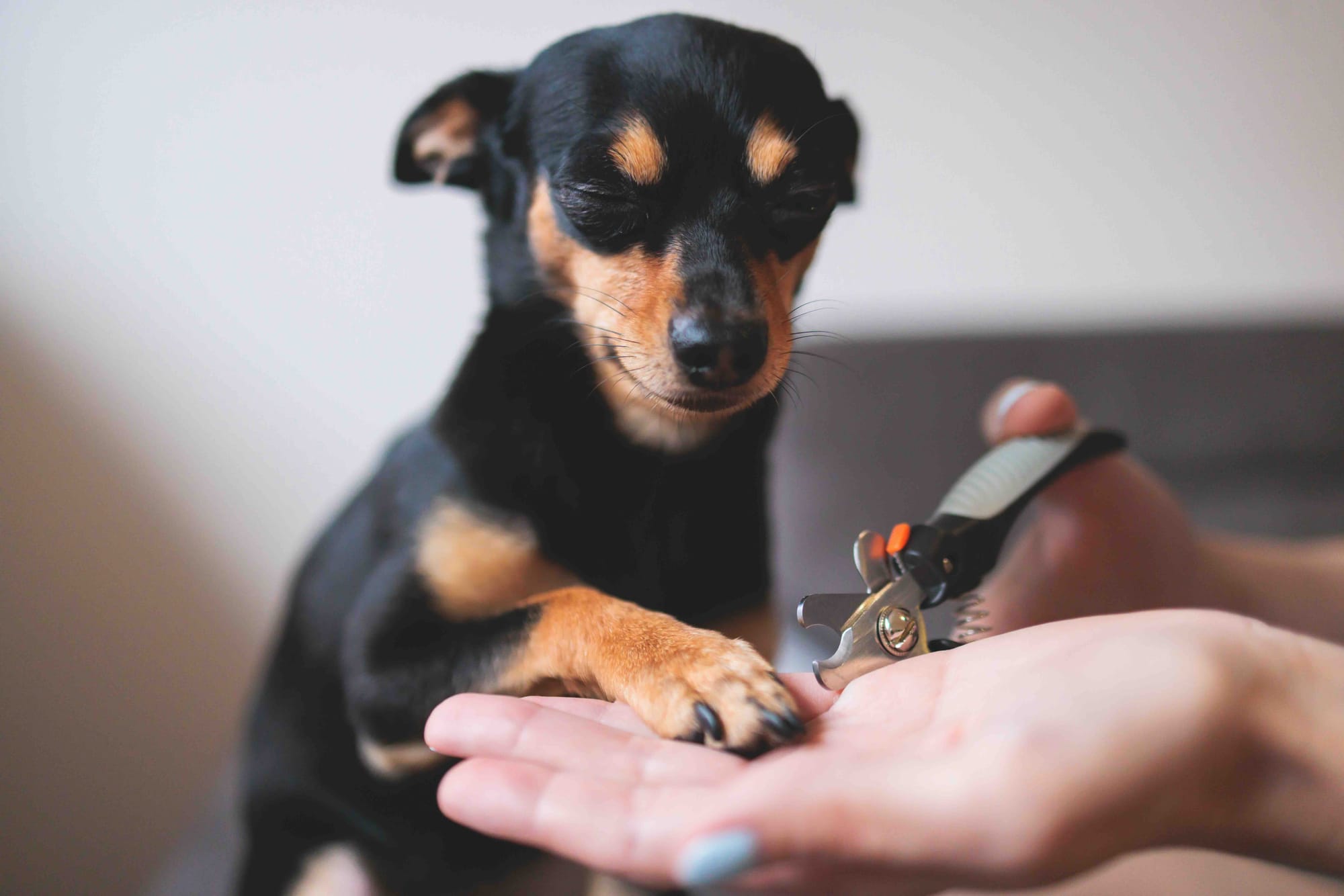
Photo by Ayla Verschueren / Unsplash

A 21-page printable starter guide for busy pet parents who want grooming to feel less like a wrestling match and more like a routine their dog understands.

You love your dog.

You do not love the part where the brush comes out and your dog suddenly develops the athletic ability of a parkour champion.

Brushing, nail trims, ear checks, paw handling, and basic grooming do not have to turn into a wrestling match. Cooperative care teaches your dog how to participate in these everyday routines instead of simply enduring them.

This 21-page starter guide gives you simple, practical steps to begin that process at home, even when your schedule is full.

What is cooperative care?

Cooperative care is a way of teaching your dog to say, “I’m ready,” “I need a break,” or “that was enough for now.”

Instead of forcing your dog through grooming, you build clear communication. Your dog learns what to do. You learn what to watch for. The whole routine becomes more predictable, less stressful, and much kinder for both of you.

This guide focuses on the everyday care tasks most pet parents struggle with:

  • brushing nail trims
  • paw handling
  • grooming tools
  • start and stop signals
  • short daily practice sessions

This is for you if…

  • Your dog leaves the room when they see the brush.
  • Nail trims feel impossible, emotional, or just plain exhausting.
  • You want to use positive, trust-building methods instead of restraint.
  • You have a busy life and need something you can practice in a few minutes a day.
This guide is not for dogs who are biting, growling, or panicking during care.

If your dog is showing serious fear or aggression around grooming, this guide can help you understand the foundation, but you’ll likely need one-on-one support from a qualified trainer or veterinary behavior professional.

What's inside the guide

Start signals
Teach your dog a clear way to say, “I’m ready.”

Stop signals
Learn how to notice when your dog needs a break before things escalate.

A 5-minute brushing plan
A simple day-by-day approach to help your dog feel better about the brush.

Nail trim progress tracker
Break nail care into small, realistic steps so you can see progress instead of guessing.

Brushing progress tracker
Track calm handling, brush exposure, and small wins over time.

Treat ideas for training
A printable list of reward options to keep your dog motivated.

Stress-free grooming checklist
Gather the tools that make short sessions easier and more predictable.

Troubleshooting help
Support for common challenges like fear of tools, fidgeting, avoidance, and over-excitement.

You don't need fancy equipment!

You can start with simple household items:

  • a towel or yoga mat
  • a brush
  • tiny high-value treats
  • a quiet corner
  • two to five minutes

The goal is not to finish a full grooming session today. The goal is to help your dog feel safe enough to try again tomorrow. That is where real progress begins.

Getting Started with Cooperative Care:
A Guide for Busy Pet Parents
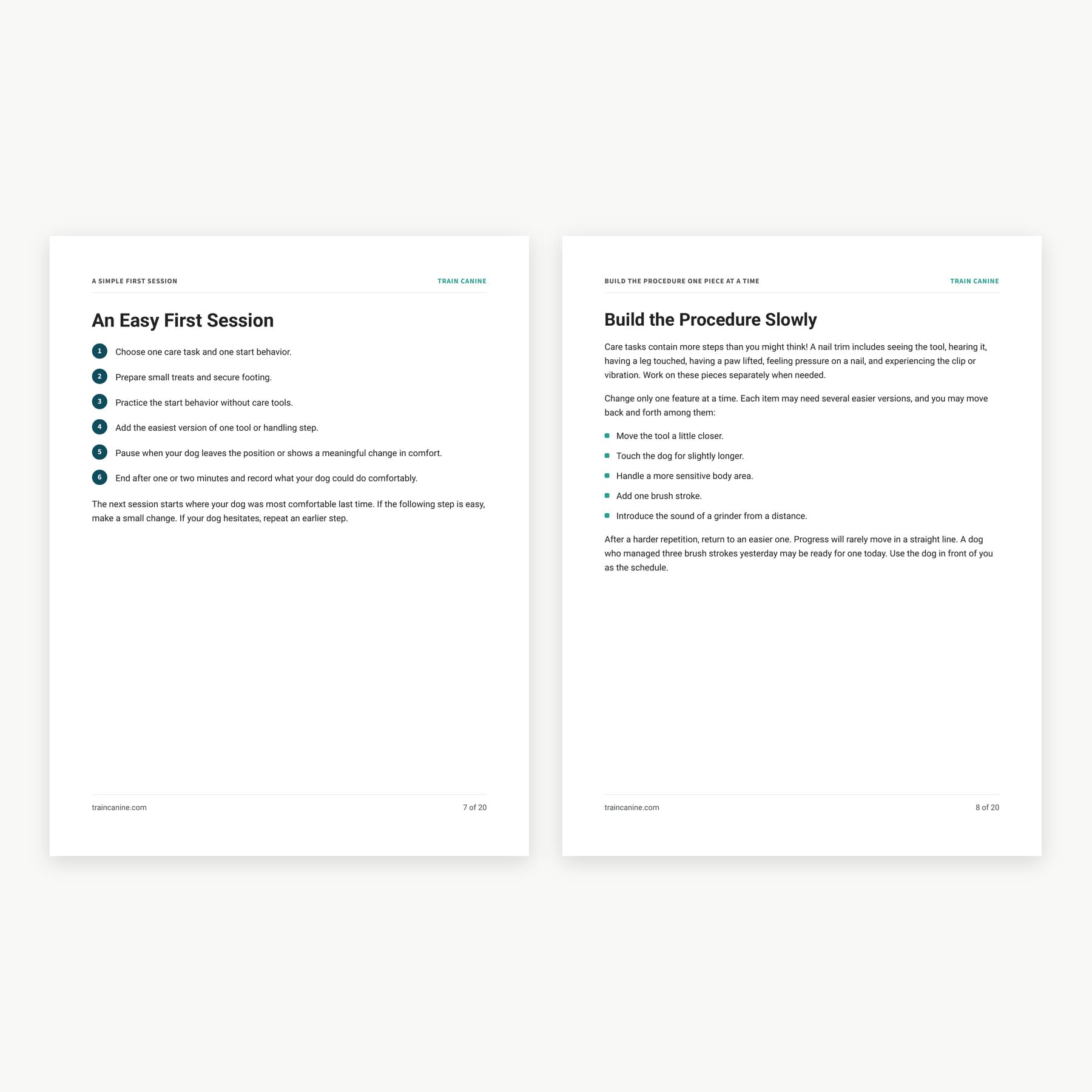
21-page PDF
Printable checklists and trackers
Designed for short, realistic training sessions

Get the cooperative care guide

A calmer routine starts with one small step

Maybe today your dog only looks at the brush; maybe tomorrow they sniff it.

Then, next week they hold still for one gentle stroke.

This all counts!

Cooperative care is not about rushing through the task. It is about teaching your dog that grooming can be predictable, safe, and worth participating in. When your dog learns that their “no” will be respected, their “yes” becomes easier to earn.


Frequently asked questions

Is this a full behavior modification plan?

No. This is a beginner-friendly starter guide. It is designed to help you begin cooperative care at home with calm, short practice sessions. If your dog growls, snaps, bites, panics, or has a history of severe handling fear, work with a qualified trainer or veterinary behavior professional.

How long are the training sessions?

Start with two to five minutes. Short sessions are easier to fit into real life and easier for your dog to enjoy.

Can this help with nail trims?

Yes. The guide includes nail trim foundations and a progress tracker so you can break the process into smaller steps.

What age dog is this for?

Puppies, adult dogs, and older dogs can all benefit. For puppies, it helps build good habits early. For adult dogs, it helps rebuild trust around care tasks that may already feel stressful.

Do I need to be an experienced trainer?

No. This guide is written for pet parents. It gives you a practical place to begin without overwhelming you or your dog.


About Train Canine

Train Canine helps pet parents build calmer, more cooperative relationships with their dogs through thoughtful, reward-based training.