How to prepare for a dog behavior consultation: A workbook for dog trainers


There is a point in many dog training careers when the cases start to feel different.
A client reaches out because their dog is barking and lunging on walks, growling at visitors, snapping during handling, panicking when left alone, or suddenly acting in a way the family does not understand. They want help, and they may already be worried, embarrassed, frustrated, or scared.
If you are the trainer, it can be tempting to look for the training answer right away: What should we teach? What should the client do? What exercise fits this problem?
However, behavior cases usually need a different first question. Before you decide what to teach, you need to understand what is happening.
What started the behavior? What keeps it going? What has the client already tried? What does the dog do before and after the behavior? What is the risk level? Is there a health, pain, medication, safety, or scope question that needs attention before training moves forward?
That is the tricky part of preparing for a dog behavior consultation. You are not just collecting a few intake details. You are trying to hold enough information to make careful decisions without pretending you know more than you do.
This is where a structure helps.
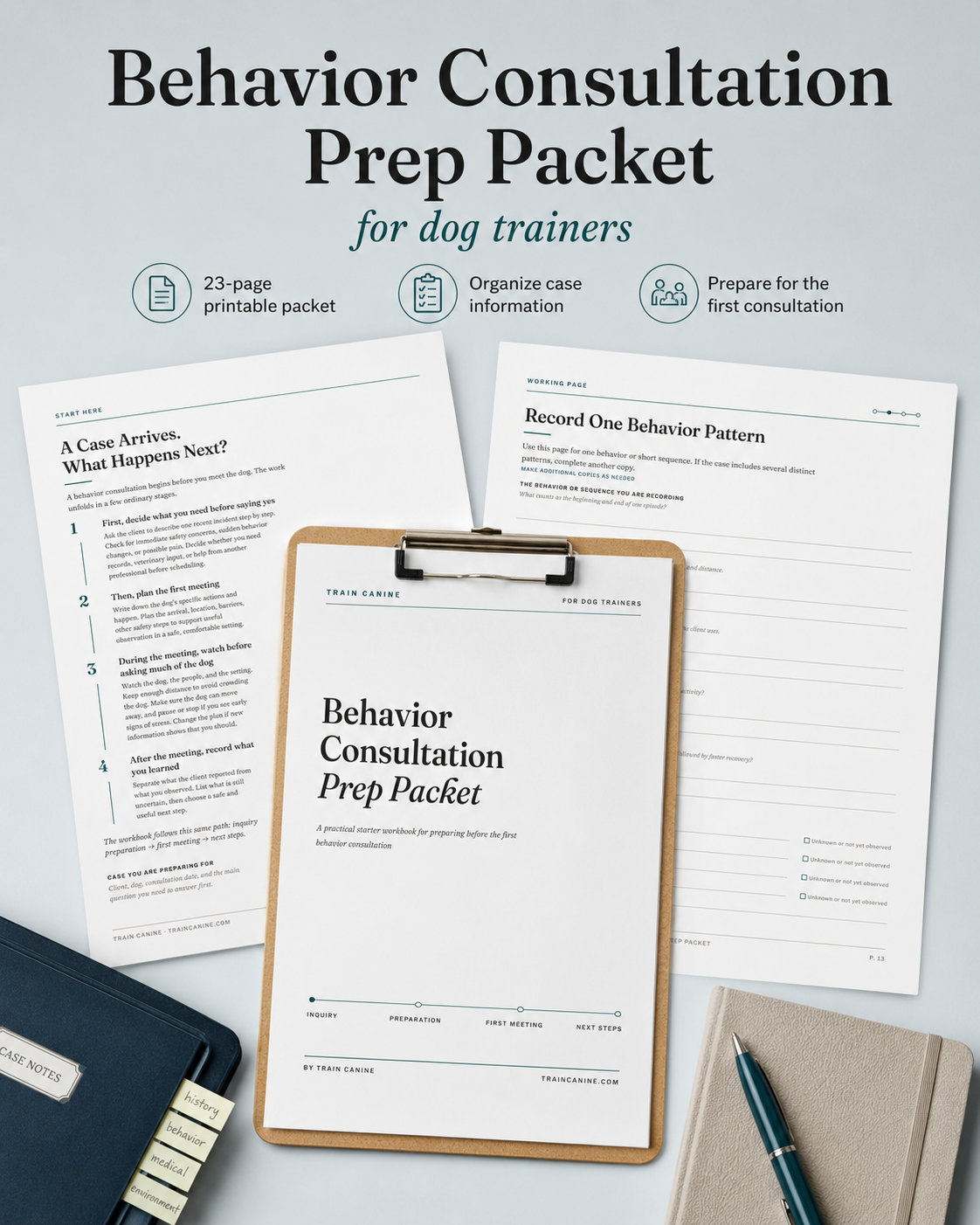
I created the Behavior Consultation Prep Packet for Dog Trainers for trainers who are beginning to take behavior cases and want a clearer way to prepare before the first consultation.
It is a 23-page workbook for organizing behavior case information before, during, and after that first meeting. It is not a diagnostic tool, a behavior modification plan template, or a complete behavior consulting course.
It does not give step-by-step instructions for solving each behavior problem, but instead helps you understand the case as you decide what to do next. Choosing the right training or behavior-change strategy is its own skill set, and this workbook is meant to support the step that comes first: gathering the details, noticing the patterns, and preparing to think clearly.
If you are starting to notice that some cases require more than your usual training plan, you may also want to read When training isn't enough: The skill gap most dog professionals eventually face.
It is a practical case-prep workbook for trainers who want to slow down, sort the information, notice safety and scope questions, and think more clearly before building a plan.
Who This Workbook Is For
This workbook is for dog trainers who are beginning to take behavior cases or who want a more organized process for first consultations.
It may be a fit if you are working with, or preparing to work with, cases involving:
- Reactivity
- Fearful behavior
- Aggression concerns
- Bite history
- Multi-dog household issues
- Handling sensitivity
- Separation-related concerns
- New behavior changes
- Client goals that need sorting or reframing
- Cases where veterinary, behavior, or safety support may need to be discussed
It is especially useful if you already have training skills but want a clearer way to slow down, sort the information, and prepare for the first session with more professional judgment.
What Should Dog Trainers Review Before a Behavior Consultation?
Before a dog behavior consultation, a trainer should review more than the client's main complaint.
A useful case-prep process should include:
- The primary behavior concern
- When the behavior started
- What happens before, during, and after the behavior
- Frequency, intensity, duration, and recovery time
- Known triggers and contexts
- Current management
- Household routines and environment
- Health, pain, medication, or wellness questions to ask about
- Safety history
- Bite history or near-miss incidents
- Previous training or professional support
- Client goals and expectations
- Scope, referral, and collaboration considerations
This workbook will help you to arrive at the first consultation with a clearer map of where you, the client and the dog are headed.
Why First-Consultation Prep Matters
Behavior cases can become complicated fast.
A dog described as "stubborn" may be frightened. A dog described as "protective" may be struggling with proximity, pressure, pain, or learned rehearsal. A client who wants obedience may actually need management, safety planning, veterinary input, or a more realistic timeline.
Good preparation helps you separate:
- What the client reported
- What has actually been observed
- What still needs to be clarified or reconciled
- What might be safety concerns
- What might require referral or collaboration
- What can reasonably be addressed in the first session
The first consultation is where you begin deciding how carefully the case needs to be handled.
What's Inside the Behavior Consultation Prep Packet
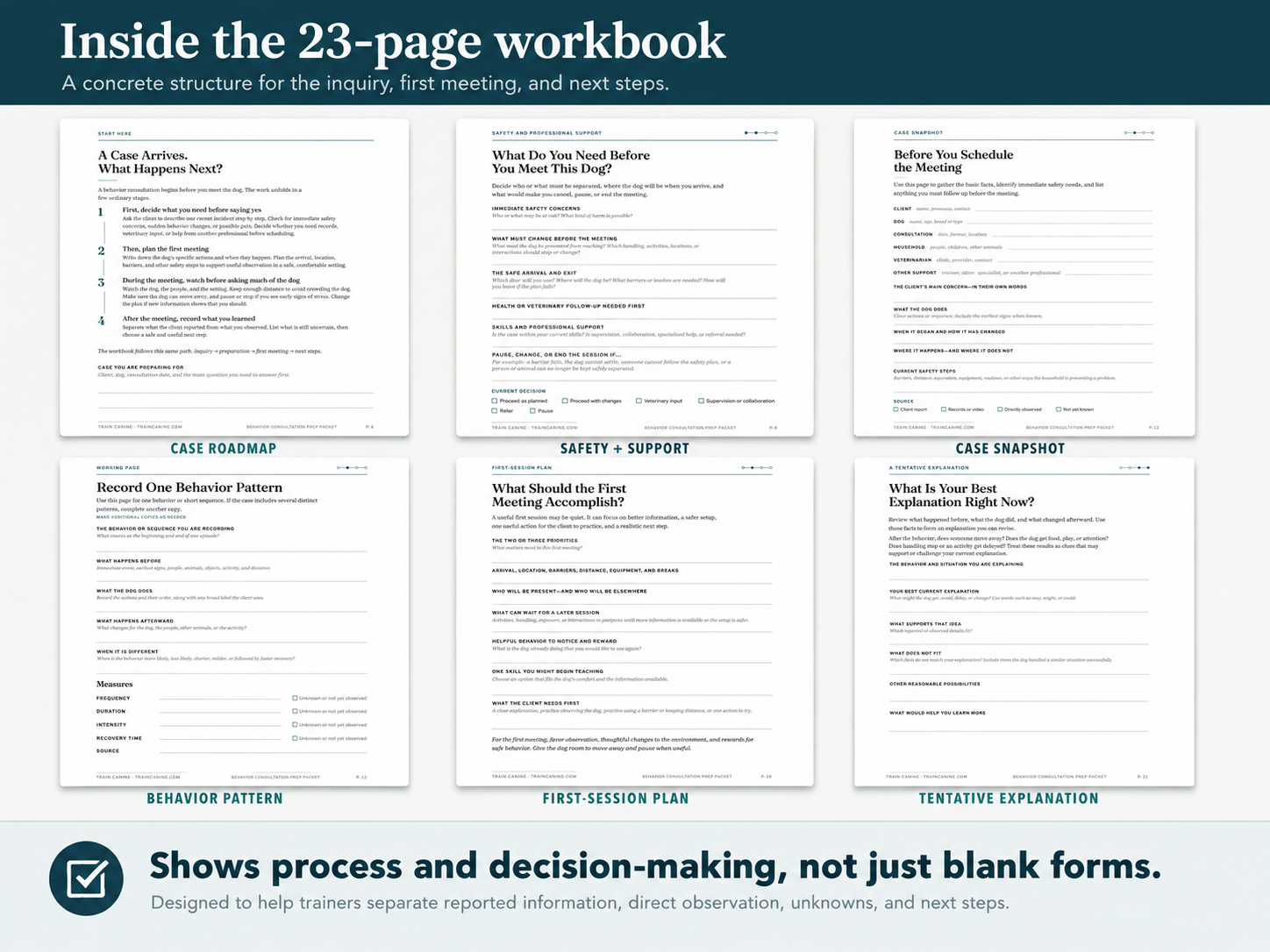
The Behavior Consultation Prep Packet for Dog Trainers includes 23 pages of case-prep worksheets, prompts, and planning pages.
Inside the workbook, you will find:
- A case roadmap
- A worked example using a fictional case
- Client inquiry and case snapshot prompts
- Behavior pattern recording pages
- Health and wellness review prompts
- Safety history questions
- Scope and support considerations
- First-session planning pages
- Post-session learning prompts
- Tentative explanation and goal-setting pages
- Progress and review prompts
- Referral and collaboration notes
The workbook is built to help you organize information before, during, and after the first behavior consultation.
What This Workbook Helps You Do
Use the packet to prepare for a consultation with more structure.
It can help you:
- Slow down before jumping to exercises
- Gather relevant case information
- Describe behavior in observable terms
- Notice patterns across context, triggers, intensity, and recovery
- Identify safety and scope questions
- Prepare client education points
- Clarify what should not be attempted yet
- Plan the first session more intentionally
- Keep better notes after the consultation
- Think through when referral or collaboration may be appropriate
For a trainer taking paid behavior cases, a structured prep process is not extra paperwork. It is part of the professional service.
What This Workbook Is And Is Not
This workbook does not recommend specific interventions, replace experience, veterinary care, legal advice, qualified professional support, or your own professional judgment.
This is a practical preparation tool for trainers who want to organize case information before building or recommending next steps.
How to Use It
You can use the workbook in a few ways:
- Before a first consultation, to review the client inquiry and identify what needs clarification
- During a consultation, to keep case information organized
- After a consultation, to summarize what you learned and plan next steps
- As a thinking tool when deciding whether a case is within your current scope
- As a professional-development resource if you are moving from basic training into behavior work
Get the Workbook
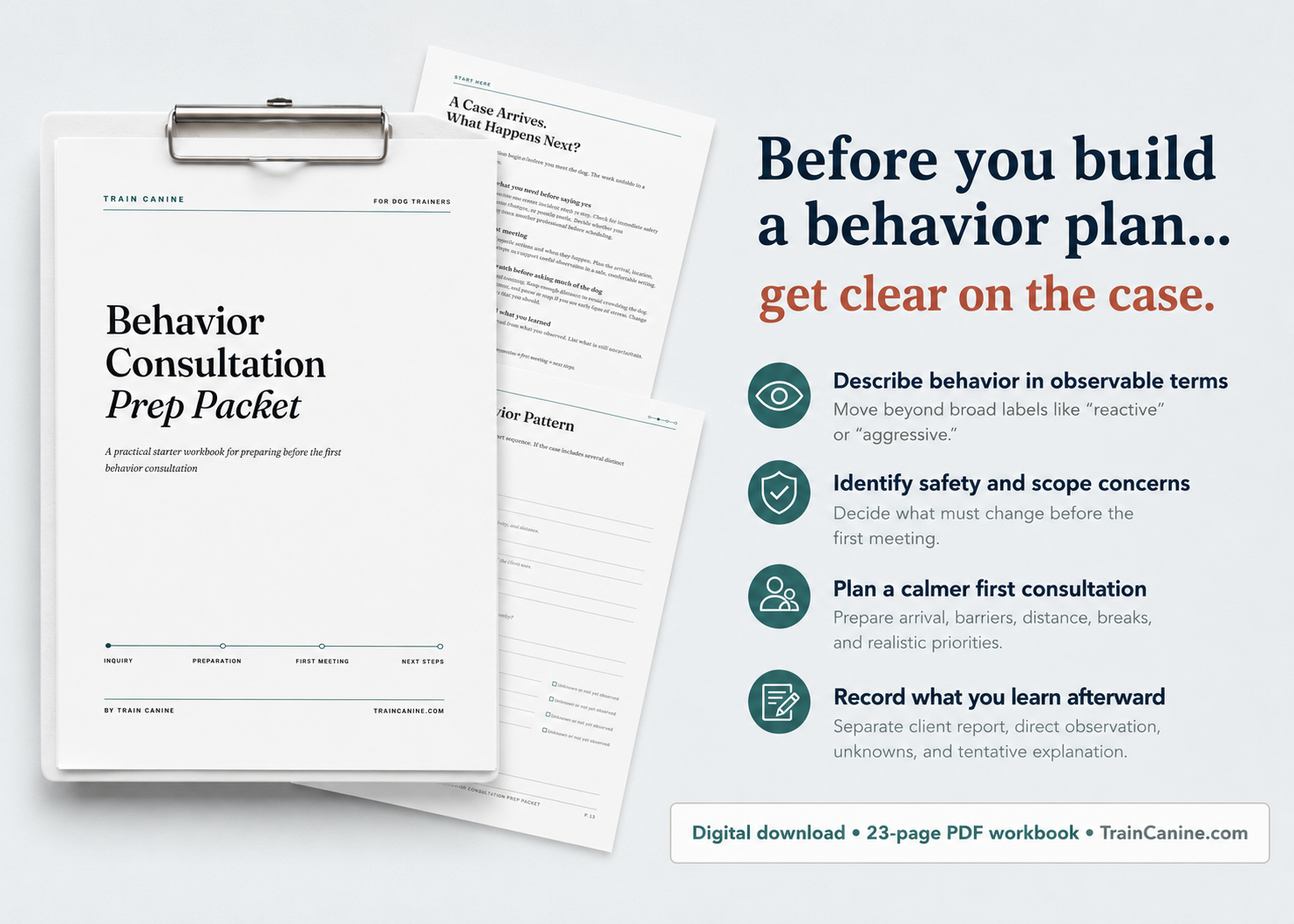
The Behavior Consultation Prep Packet for Dog Trainers is available as a digital download for $19.
If you are beginning to take behavior cases, or if you want a clearer structure for your first consultations, this workbook gives you a practical place to start.
Frequently Asked Questions
Is this workbook a dog behavior intake form?
It is more than a basic intake form. The workbook includes intake-style prompts, but it also helps trainers think through behavior patterns, safety history, health and wellness questions, scope considerations, first-session planning, and post-session notes.
Is this workbook for new dog trainers?
It is best for trainers who already have some training foundation and are beginning to take behavior cases, or trainers who want a more structured preparation process for behavior consultations.
Can this be used for aggression or reactivity cases?
The workbook can help you organize information related to aggression, reactivity, fear, and other behavior concerns. It does not tell you how to treat those cases or decide whether they are within your scope. Use professional judgment and appropriate referral or collaboration when needed.
Does this include a behavior modification plan?
No. The packet is for preparation and case organization. It helps you understand the case before building or recommending a plan.
Can I use this with my dog training clients?
Yes. The workbook is designed for dog trainers preparing for behavior consultations. Use it as a professional case-prep and planning tool in your own workflow.
Is this a substitute for a course or mentorship?
No. It is a workbook, not a course, certification, mentorship, or supervision program.